
How Memory Formation Works During Sleep
Most people think of sleep as an absence. An off switch. A quiet pause between days. In reality, sleep is one of the most active and meaningful states your mind ever enters, especially when it comes to memory.
Every night, while your body rests, your brain is busy deciding what deserves to stay. Moments you barely noticed, emotions you tried to ignore, patterns you did not consciously recognize all pass through an invisible filter. What emerges from that process becomes part of who you are tomorrow.
Understanding how memory formation works during sleep is not just neuroscience trivia. It reshapes how you relate to learning, growth, creativity, and even dreams themselves.
Sleep Is When the Brain Becomes a Curator
During waking life, your brain is flooded with information. Sensory input, conversations, emotions, micro decisions all stack up faster than they can be fully processed. Sleep is when the brain steps back and begins to curate.
Instead of recording everything equally, the sleeping brain prioritizes meaning. Emotional relevance, repetition, novelty, and personal importance all influence what gets stored. This is why a single charged conversation can feel unforgettable, while an entire routine day disappears.
Memory formation during sleep is not about copying reality. It is about interpretation. Your brain is constantly asking what matters and what can be let go.
The Architecture of Memory Across Sleep Stages
Sleep unfolds in cycles, and each stage contributes differently to memory formation. Light sleep acts like a transition space, gently reducing sensory input and preparing neural networks for deeper work. Deeper non REM sleep focuses on stabilizing facts, skills, and learned information.
REM sleep, the stage most associated with vivid dreaming, plays a unique role. Here, memories are not just stored but integrated. Emotional experiences are softened, creative associations are formed, and distant ideas are woven together in ways that rarely happen during the day.
This is why insights often appear after a good night of sleep. The brain has been quietly connecting dots beyond conscious control.
Dreams as the Language of Memory Integration
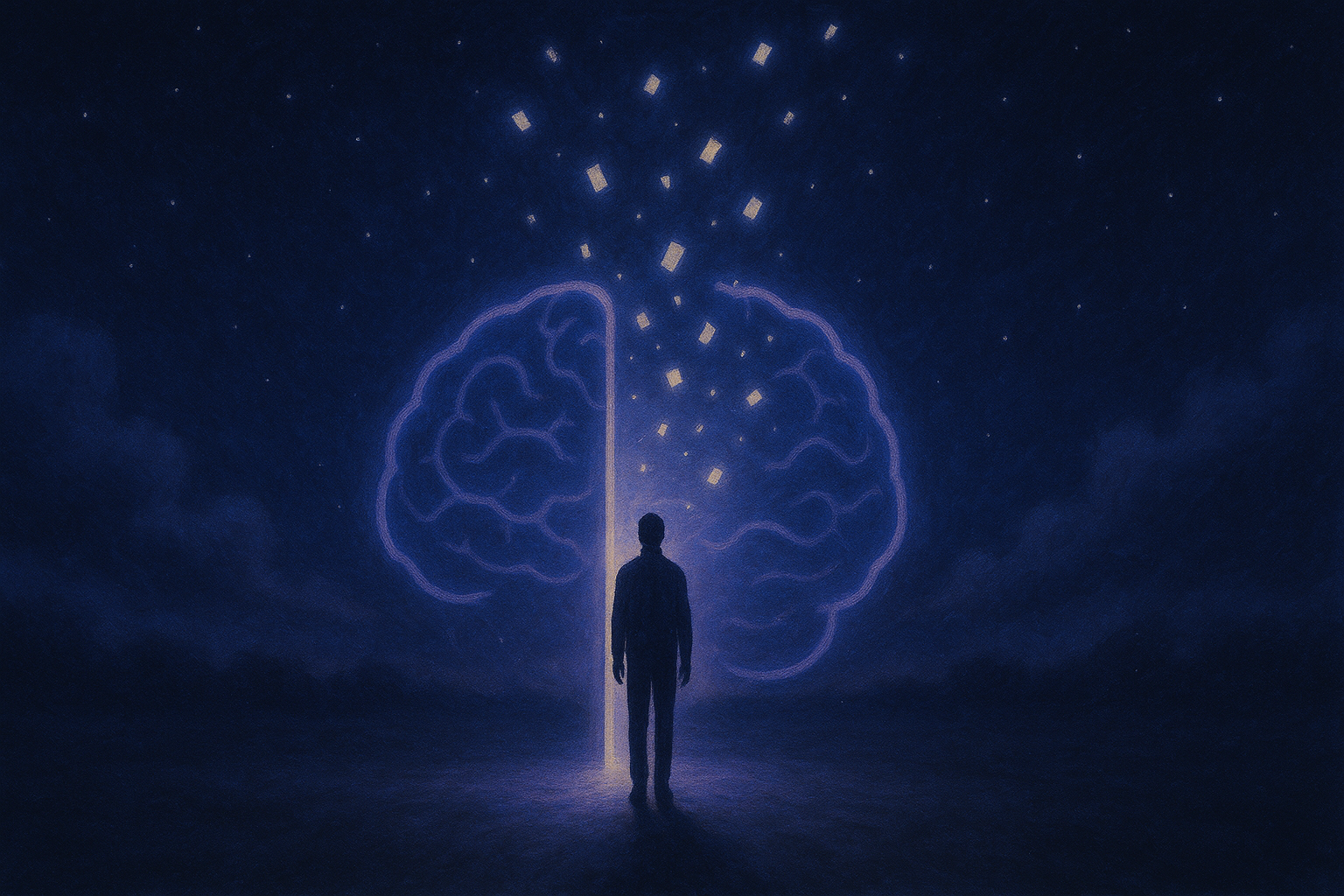
Dreams are not random noise. They are the subjective experience of memory integration. When you dream, you are witnessing fragments of your life being reorganized in symbolic form.
Characters may merge, locations may shift, timelines may collapse. This is not confusion but compression. The brain speaks in metaphor because metaphors are efficient carriers of meaning.
From this perspective, dreams are not messages to decode literally. They are reflections of how your mind is restructuring itself. Paying attention to them builds intimacy with your own cognitive process.
Emotional Memory and Why Sleep Heals
Not all memories are equal. Emotional memories require special care, and sleep provides it. During REM sleep, emotional intensity is replayed without the same stress chemistry present during waking life.
This allows experiences to be remembered without overwhelming the nervous system. Painful moments can be integrated without reopening the wound. Joyful moments can be reinforced without becoming addictive.
This mechanism explains why sleep deprivation amplifies emotional reactivity. Without enough sleep, memories remain raw and unresolved, lingering closer to the surface.
Lucidity as a Window Into Memory in Motion
Lucid dreaming offers a rare opportunity. It allows awareness to enter the very space where memory is being shaped. When you become lucid, you are not stepping outside the process but observing it from within.
This awareness can deepen emotional clarity, strengthen intention, and sometimes stabilize insights that might otherwise dissolve upon waking. Journaling dreams or gently reflecting on them strengthens the bridge between night and day.
Some people use tools like the Onyra app as a quiet companion in this process, helping track patterns and notice how dreams evolve over time. The value is not control but continuity.

Memory Is Not Storage, It Is Becoming
It is tempting to think of memory as an archive. Something static and retrievable. In reality, memory is alive. Every recall subtly rewrites it, and every night reshapes it again.
Sleep is where this ongoing revision happens most freely. It is where you quietly become a slightly different person, aligned with what your mind decided was worth carrying forward.
Approaching sleep with respect changes the process. Intention, reflection, and curiosity all influence what the brain highlights when the lights go out.
Bringing Wakeful Attention Into the Night
You do not need to force lucid dreams to benefit from understanding sleep and memory. Simple practices help. Consistent sleep schedules, reduced stimulation before bed, and moments of reflection at night all signal importance to the brain.
Noting what mattered during the day gives your mind raw material. Dreams respond to attention. Memory follows meaning.
Over time, tools like Onyra can support this awareness by making the invisible patterns of sleep more visible, without turning the experience into a task.

Sleep as an Active Relationship With Yourself
When you understand how memory formation works during sleep, rest stops being passive. Each night becomes a conversation between who you were and who you are becoming.
Dreams are not distractions from reality. They are part of how reality is constructed inside you. Sleep is not lost time. It is where meaning settles.
If waking life is about experience, sleep is about integration. And in that quiet integration, something essential is always being learned, even when you forget the dream itself.