
EEG, Wearables, and External Cues
The idea is seductive: a device watches your sleep, detects the right moment, and sends a gentle cue that turns into lucidity. In the best case, it feels like technology cooperating with consciousness—an external nudge that becomes an inner awakening.
Sometimes it works. Often it doesn’t. And even when it works, the most important piece is not the device. It’s your relationship with attention.
This is not a takedown of sleep tech. It’s a clarification of what wearables and EEG can realistically do, why they fail, and how to use them in a way that supports lucid dreaming without turning your nights into a lab experiment you can’t escape.
The Three Things Sleep Tech Can Help With
Most lucid dreaming tech falls into three functions:
- Tracking: estimating sleep stages, awakenings, and patterns across nights.
- Cueing: delivering light, sound, or vibration cues designed to enter dreams.
- Feedback: helping you see correlations between habits and dream recall or lucidity.
Tracking and feedback are often more useful than cueing, because they support the real lever: consistency. Cueing is a bonus when conditions are right.
What EEG and Wearables Actually Measure (Most of the Time)
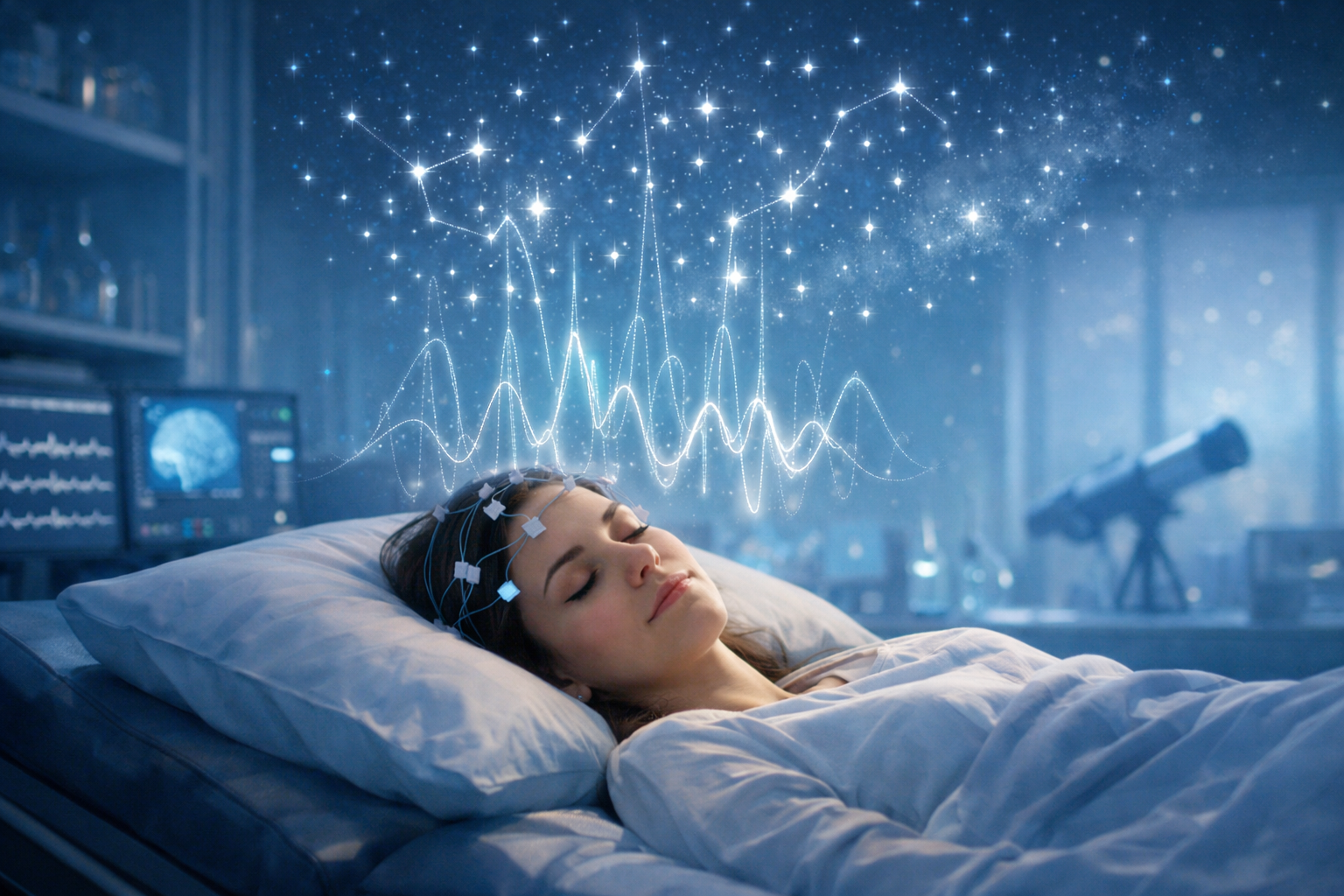
True EEG measures electrical activity at the scalp. Consumer devices often approximate this with limited sensors, or they don’t measure EEG at all and rely on movement, heart rate, and temperature.
That doesn’t mean they’re useless. It means you should treat their sleep stage detection as an estimate, not a verdict. If your device says “REM,” it might be right. It might also be close. Either way, your subjective experience still matters more than the label.
External Cues: How They’re Supposed to Work
Cues succeed when they enter the dream gently enough to be noticed but not so strongly that they wake you up. That’s a narrow corridor.
Light cues can become headlights, glowing symbols, or a sunrise inside the dream. Audio cues can become music, a voice, or a distant alarm. Vibration can become a rumble, a phone buzz in-dream, or a strange bodily sensation.
The cue is not the lucidity. The cue is the question: “Why is that happening?”

Why Cueing Often Fails
Cueing fails for predictable reasons:
- The cue is too weak and never enters the dream.
- The cue is too strong and wakes you up.
- The cue enters the dream but gets absorbed into the story without triggering reflection.
- The device mistimes the cue because sleep stage detection is imperfect.
That’s why cueing works best when paired with training. If you’ve practiced reality awareness during the day, a cue is more likely to trigger the reflective mind rather than become background noise.
The Best Use of Wearables: Timing and Pattern Recognition
For many lucid dreamers, the most practical value of a device is learning when you naturally dream most and how often you wake up. That knowledge helps you plan WBTB, naps, or chaining attempts with less guesswork.
This is the mature approach: use tech to reduce uncertainty, not to outsource awareness.
How Onyra Fits Into a Tech-Supported Practice
If you use a wearable, it generates data. If you don’t connect that data to your dream experience, it’s just numbers. A short note about recall quality, dream mood, and whether you noticed cues gives the data meaning. Onyra can be that bridge: a place where the quantitative and the qualitative meet without becoming obsessive.
Over time, you learn what “REM” means for your body, not just what an algorithm says.

A Clear Bottom Line
Wearables and external cues can help, especially with timing, consistency, and feedback. But lucidity is still a skill: the capacity to recognize experience as it is, even when the world is made of your own mind.
If you treat tech as a supportive lantern instead of a steering wheel, it can raise your ceiling. If you treat it as a replacement for awareness, it often creates frustration, fragmented sleep, and dependence.
The best setup is simple: protect your sleep first, train awareness second, and let technology serve those priorities—not reverse them.