
Criticisms and Scientific Limitations
Lucid dreaming sits at an awkward edge for science. It is a first person experience, but it happens in a sleep state that can be measured. That makes it possible to study, but also easy to misunderstand.
If you want credibility, you need skepticism. Not the kind that dismisses everything, but the kind that asks careful questions. What exactly are we measuring. How reliable is the signal. How much is self report. What do the results actually support.
The Core Measurement Challenge
Dreams happen in private. Researchers rely on reports after waking. Lucid dreaming adds a partial workaround through eye movement signaling, but even that does not measure content. It measures timing.
This means a study can show that a person signaled lucidity at a certain moment, but it cannot fully verify what they experienced. The science can still be valuable. It just has to stay within that boundary.

Sample Size and Replication
Lucid dreamers who can signal on demand are rare. That can lead to small studies. Small studies can still be informative, but they are more vulnerable to noise and chance findings.
Replication is also hard. Different labs use different protocols. Sleep quality varies. Participant skill varies. These factors can change outcomes.
The correct response is patience and humility. One study is a clue, not a conclusion.
Expectation and Demand Effects
When people expect a phenomenon, they may report it more often. In lucid dreaming research, participants can be motivated to succeed. That can introduce bias.
This does not mean lucidity is fake. It means studies must be designed carefully and interpreted cautiously. The best researchers take this seriously.

What Counts as Good Evidence
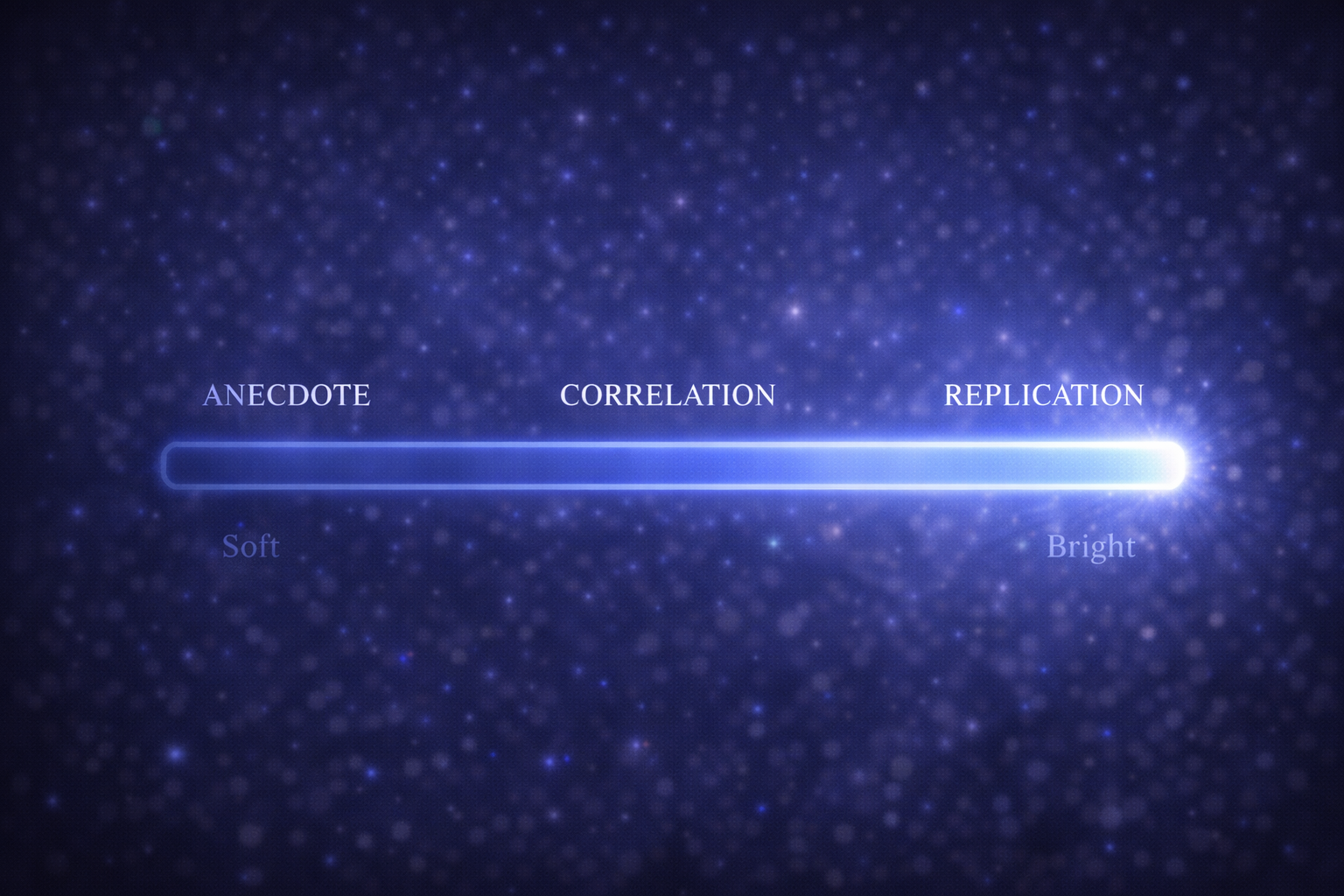
In practice, evidence comes in layers. Subjective reports. Behavioral signals like eye movements. Physiological signals from EEG. Imaging signals from fMRI. Converging patterns across these layers are stronger than any single layer alone.
This is why the field is interesting. It is one of the few places where inner experience and measurement can meet. But the meeting is imperfect.
How to Stay Grounded as a Practitioner
If you practice lucid dreaming, you can adopt the same mindset. Treat techniques as experiments. Observe results. Avoid overclaiming. Focus on what is repeatable.
Onyra can help with this approach by making it easy to log outcomes and notice patterns. The goal is not to prove a theory. The goal is to learn what reliably supports your sleep and awareness.
A Grounded Conclusion
The best criticisms of lucid dreaming research do not destroy the field. They clarify it. They protect it from hype and they point toward better methods.
If you want a rational relationship to lucid dreaming, hold both truths at once. The phenomenon is real enough to study. The evidence has limits that require care.